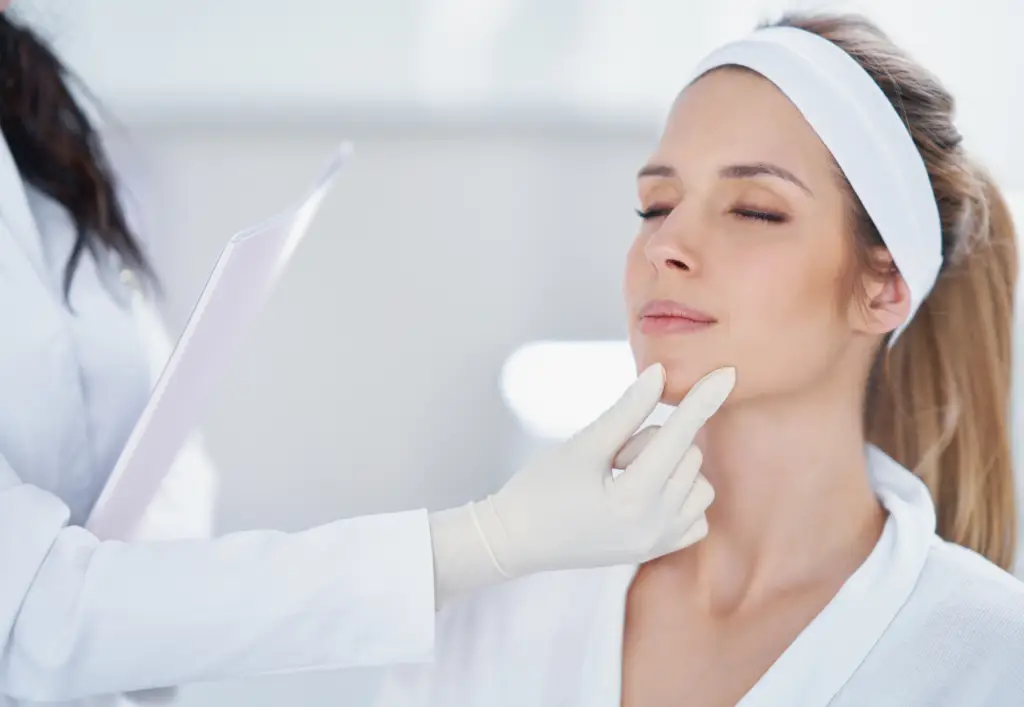
There is no universal age when someone should start Botox or filler. Your skin, facial anatomy, genetics, muscle movement, volume and aesthetic goals all play a role in determining whether an injectable treatment makes sense for you. Understanding Botox and fillers by age can help you have a more informed conversation with your dermatologist about which treatments, if any, are appropriate for you.
Botox and dermal fillers work in very different ways. Botox temporarily relaxes targeted muscles that contribute to expression lines, while fillers restore or add volume to specific areas of the face. Neither treatment is one-size-fits-all, and subtle results generally depend on choosing the right treatment, amount and placement for your individual anatomy.
Botox and Fillers by Age: Your 20s
In your 20s, Botox may be considered when expression lines are becoming noticeable, particularly between the eyebrows or around the eyes. Some patients naturally have stronger muscle movement or develop visible lines earlier than others.
Rather than treating the entire face, a conservative approach may be appropriate when only one or two areas are a concern. A technique sometimes referred to as Baby Botox uses smaller amounts of botulinum toxin to create a more subtle result. Baby Botox is not a separate product. It is a dosing and treatment approach.
The goal should not be to eliminate all facial movement. Natural expression is an important part of a balanced result, particularly when there are minimal signs of aging.
Fillers in your 20s are also not automatically necessary. When used, they may be chosen for purposes such as lip enhancement or facial contouring rather than simply treating wrinkles. Depending on the individual, filler may be used to enhance the lips, chin or other areas where additional volume or definition is desired.
Botox and Fillers in Your 30s
During your 30s, expression lines may become more noticeable even when your face is at rest. Crow’s feet, forehead lines and lines between the eyebrows can become more apparent over time.
Botox may be used to temporarily relax the muscles responsible for these expression lines. Treatment can be limited to specific areas rather than automatically treating the entire face. Depending on your anatomy and goals, other areas such as the chin or nose may also be considered.
Baby Botox can be an option for someone who wants a particularly subtle result or has relatively minimal lines.
Fillers in your 30s may still be used for lip enhancement and facial contouring. They can also be considered when early volume changes become noticeable. The appropriate treatment depends on what is actually contributing to the concern rather than simply treating according to age.
Botox and Fillers in Your 40s
By your 40s, changes in collagen, elastin, skin quality and facial volume may become more noticeable. Expression lines may be more established, while areas such as the cheeks, lips and under-eye region can begin to look different as facial volume changes over time.
Botox can soften dynamic lines caused by repeated muscle movement, including forehead lines, frown lines and crow’s feet. However, Botox does not address every type of wrinkle. Lines caused primarily by volume loss or changes in skin quality may require a different approach.
Dermal fillers may be used to restore volume in areas such as the cheeks or lips and can sometimes improve the appearance of certain facial shadows or folds. Under-eye filler, for example, may be appropriate for carefully selected patients with volume-related hollows, but not every dark circle is caused by a lack of volume.
The goal is not to replace lost volume everywhere. A thoughtful treatment plan considers where volume has actually changed and whether adding volume will improve the overall balance of the face.
Botox and Fillers in Your 50s and Beyond
In your 50s, 60s and beyond, facial aging can involve several changes at once. Collagen production declines, skin becomes less elastic, facial volume can shift and lines may become more established.
Botox can continue to soften dynamic wrinkles, while fillers may restore volume or provide additional definition in carefully selected areas. However, injectables cannot address every cause of sagging skin.
For patients with more significant laxity or changes in facial structure, a dermatologist may recommend combining injectables with other treatments designed to improve skin quality or stimulate collagen. Energy-based treatments and other non-surgical options may be considered depending on the patient’s skin, anatomy and goals.
More treatment is not necessarily better treatment. In mature skin, maintaining facial balance and avoiding excessive volume is especially important.
Other Uses for Botox and Fillers
Botox and fillers are not limited to traditional wrinkle treatment. Depending on the product and treatment area, injectables can have a range of cosmetic and medical applications.
Lip Flip
A lip flip uses a small amount of botulinum toxin near the upper lip to temporarily relax the orbicularis oris muscle. This allows the upper lip to roll slightly outward, creating the appearance of a subtle increase in lip show without adding volume with filler.
A lip flip is different from lip filler, so the right option depends on whether the goal is more lip show, more volume or both.
Masseter Botox and Jawline Contouring
The masseter muscles are located along the sides of the jaw and are involved in chewing. In some patients, these muscles are naturally prominent and contribute to a wider lower face.
Botulinum toxin can temporarily reduce masseter muscle activity. Over time, the muscle may become less prominent, which can create a narrower appearance in the lower face. This treatment should be carefully planned because the masseter muscles play an important role in chewing.
Botox for Hyperhidrosis
Botox has applications beyond aesthetics. It is also FDA-approved for severe primary underarm hyperhidrosis in appropriate patients.
Botulinum toxin works by blocking the nerve signals that activate sweat glands in the treated area, reducing excessive sweating. If excessive sweating is affecting your daily life, a dermatologist can help determine whether Botox or another treatment is appropriate.
Filler for Certain Acne Scars
Some acne scars are depressed or atrophic, meaning the scar sits below the surrounding skin. In carefully selected cases, filler can be used to elevate certain depressed scars and make them less noticeable.
Not every acne scar is appropriate for filler. The type, depth and location of the scar all matter, and other treatments such as laser resurfacing or subcision may be considered depending on the individual.
Body and Hand Rejuvenation
Certain injectable products can also be used outside the face. Depending on the product and its approved uses, injectables may be considered for areas such as the hands.
For example, some collagen-stimulating injectable treatments can improve the appearance of volume loss or skin quality in selected areas. Treatment should always be based on the specific product, its approved indications and the patient’s anatomy.
There Is No Perfect Age for Botox or Filler
The biggest takeaway when considering Botox and fillers by age is that your age should not be the only factor determining your treatment plan.
Someone in their 20s may benefit from Botox for prominent expression lines, while another person the same age may not need an injectable treatment at all. Likewise, someone in their 50s may benefit from a combination of Botox, filler and skin resurfacing, while another patient may need an entirely different approach.
A consultation with an experienced dermatologist can help determine what is actually contributing to the changes you are seeing and which treatments may provide a natural-looking result.
Interested in learning whether Botox or filler is right for you? Schedule a consultation with Supriya Aesthetic Dermatology in West Palm Beach or Jupiter. Call 561-805-9399 or visit our consultation page to get started.