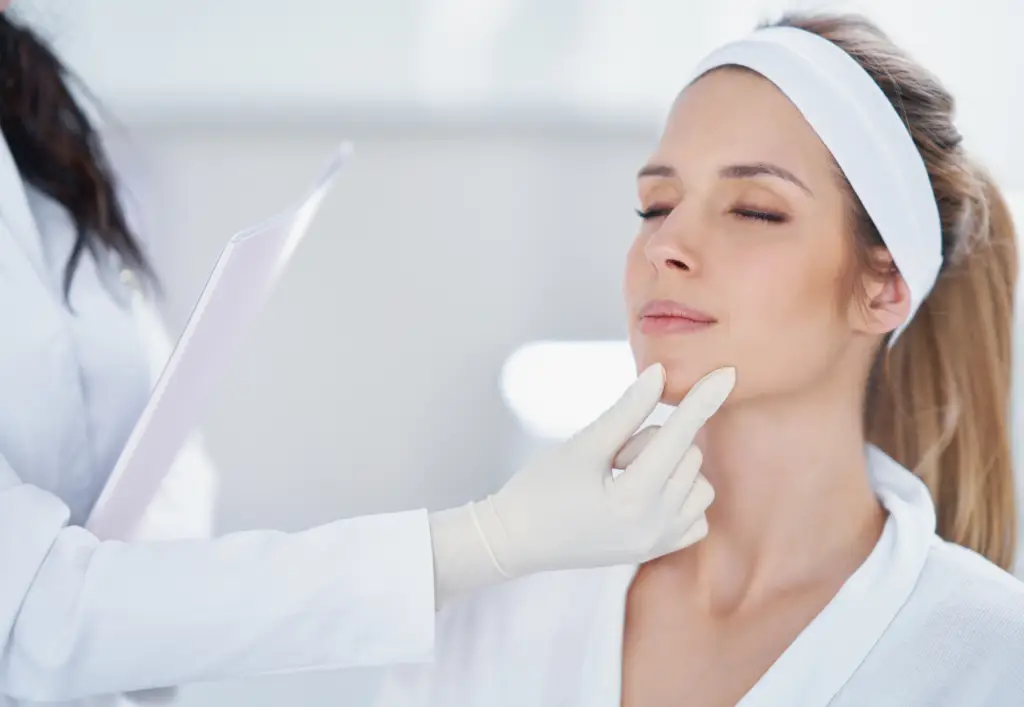
If you’re looking to improve your skin’s texture, tone, and overall appearance, a chemical peel can be an effective place to start. Chemical peels can address concerns including fine lines, breakouts, discoloration, uneven skin tone, dullness, and sun damage. Depending on the type and strength of the peel, treatment may require little to no downtime or several days of redness, dryness, scaling, or peeling.
The right chemical peel aftercare routine is an important part of protecting your skin while it heals and maintaining your results. Your provider will give you specific instructions based on the type of peel you received, but these general do’s and don’ts can help guide your recovery.
Follow Your Aftercare Instructions
First and foremost, follow the aftercare instructions provided by your dermatologist or skincare provider. Chemical peels vary in strength and depth, so the products you should use and how quickly you can return to your regular skincare routine will depend on your individual treatment.
Before your peel, make sure your provider knows about any medications, skincare products, allergies, sensitivities, or previous cosmetic treatments. This information can help your provider create an appropriate treatment and aftercare plan.
The American Academy of Dermatology notes that healing time can range from about one week for a lighter peel to several weeks for deeper peels, making individualized aftercare particularly important.
Keep Your Skin Cool
Your skin may be more sensitive following a chemical peel, so avoid unnecessary heat and irritation while it heals. When washing your face, use lukewarm water rather than very hot water, and gently pat your skin dry instead of rubbing it.
Depending on the peel you received, your provider may also recommend temporarily avoiding strenuous exercise, hot tubs, saunas, steam rooms, and other activities that expose your skin to excessive heat or sweating.
The goal is simple: give your skin time to recover without adding unnecessary irritation.
Protect Your Skin From the Sun
Sun protection is one of the most important parts of chemical peel aftercare. Treated skin can be especially sensitive, and sun exposure can increase irritation and contribute to unwanted pigmentation.
Once your provider tells you it is appropriate to use sunscreen, apply a broad-spectrum SPF 30 or higher as directed. Hats, shade, and protective clothing can provide additional protection when you are outdoors.
The American Academy of Dermatology recommends broad-spectrum, water-resistant sunscreen with SPF 30 or higher.
If your provider recommends avoiding direct sun completely during the initial healing period, follow those instructions rather than relying on sunscreen alone.
Be Gentle With Your Skin
After a chemical peel, this is not the time to introduce a complicated skincare routine. Keep things simple and gentle while your skin heals.
Use a gentle cleanser as recommended by your provider, and avoid scrubs, cleansing brushes, exfoliating tools, and other products that could create additional irritation.
You may also need to temporarily stop products containing exfoliating acids such as alpha-hydroxy acids (AHAs) and beta-hydroxy acids (BHAs). When you can safely resume these products will depend on the type of peel and how your skin is recovering.
If you are unsure whether a product is appropriate, ask your provider before using it.
Keep Your Skin Moisturized
Moisturizer can help relieve dryness and tightness while your skin heals. Your provider may recommend a particular moisturizer, cream, or ointment depending on the type of chemical peel you received.
Do not assume that a heavier product is always better, either. Aquaphor, for example, is an ointment rather than a water-based moisturizer. Ointments can be highly occlusive, which may be appropriate for some patients and treatments, while others may do better with a cream or lotion.
The best choice depends on your skin and the type of peel you received, so follow your provider’s recommendations. The American Academy of Dermatology also notes that keeping treated skin moisturized can help prevent excessive dryness and cracking during healing.
Avoid Strong Actives
It can be tempting to jump back into your normal skincare routine as soon as possible, especially when you are excited about your results. Give your skin some time first.
Your provider may ask you to temporarily stop retinol, prescription retinoids, AHAs, BHAs, benzoyl peroxide, or other potentially irritating active ingredients.
When you can resume these products will depend on your individual treatment and how quickly your skin heals. Do not restart strong actives simply because your skin appears better on the surface.
When in doubt, ask your provider before adding an active ingredient back into your routine.
Do Not Pick or Peel Your Skin
This can be one of the hardest parts of chemical peel aftercare.
Depending on the type of peel, you may experience dryness, flaking, scaling, or visible peeling as your skin heals. It can be tempting to pull away pieces of skin that are already beginning to lift, but resist the urge.
Picking, scratching, or manually removing peeling skin can irritate the area and interfere with the healing process. The American Academy of Dermatology specifically advises against scratching or picking treated skin because doing so can increase the risk of infection and scarring.
Instead, let the skin shed naturally and continue following the cleansing and moisturizing instructions provided by your provider.
Give Your Skin Time to Heal
One of the biggest mistakes people make after a chemical peel is expecting their skin to look completely healed immediately.
The amount of downtime varies depending on the peel. A lighter peel may cause redness and scaling for several days, while medium or deeper peels can require considerably more recovery time.
Be patient with the process. Temporary redness, dryness, tightness, or peeling can be part of the healing process, and your final results may not be apparent until your skin has fully recovered.
Know When to Contact Your Provider
Some sensitivity and peeling can be expected after a chemical peel, but significant or worsening symptoms should not be ignored.
Contact your provider if you experience unusual or severe burning, swelling, blistering, persistent pain, signs of infection, or any reaction that concerns you. Your provider can determine whether what you are experiencing is part of the normal healing process or requires additional treatment.
Your provider should always be your first source for questions about your individual recovery.
When Is the Best Time for a Chemical Peel?
Chemical peels can be performed at different times of the year, but your provider may recommend timing your treatment around your sun exposure and lifestyle.
Because sun protection is particularly important while your skin is healing, some patients find it easier to schedule a peel during periods when they can minimize prolonged outdoor exposure. This can be especially relevant in South Florida, where strong sun exposure is a consideration throughout the year.
Rather than choosing a season based solely on the calendar, talk with your provider about the timing of your treatment, your upcoming travel or outdoor plans, and the amount of downtime you can accommodate.
Chemical Peel Aftercare in Palm Beach
A chemical peel can be an effective way to refresh the skin and address concerns such as discoloration, uneven texture, fine lines, acne, and sun damage. But the treatment itself is only part of the process. Proper chemical peel aftercare helps give your skin the time and support it needs to heal properly.
If you are considering a chemical peel, the team at Supriya Aesthetic Dermatology can help determine which treatment is appropriate for your skin and goals. Schedule a consultation at our West Palm Beach office or Jupiter office, or request a consultation.
Call 561-805-9399 or email info@okgppwvm.elementor.cloud to get started.